
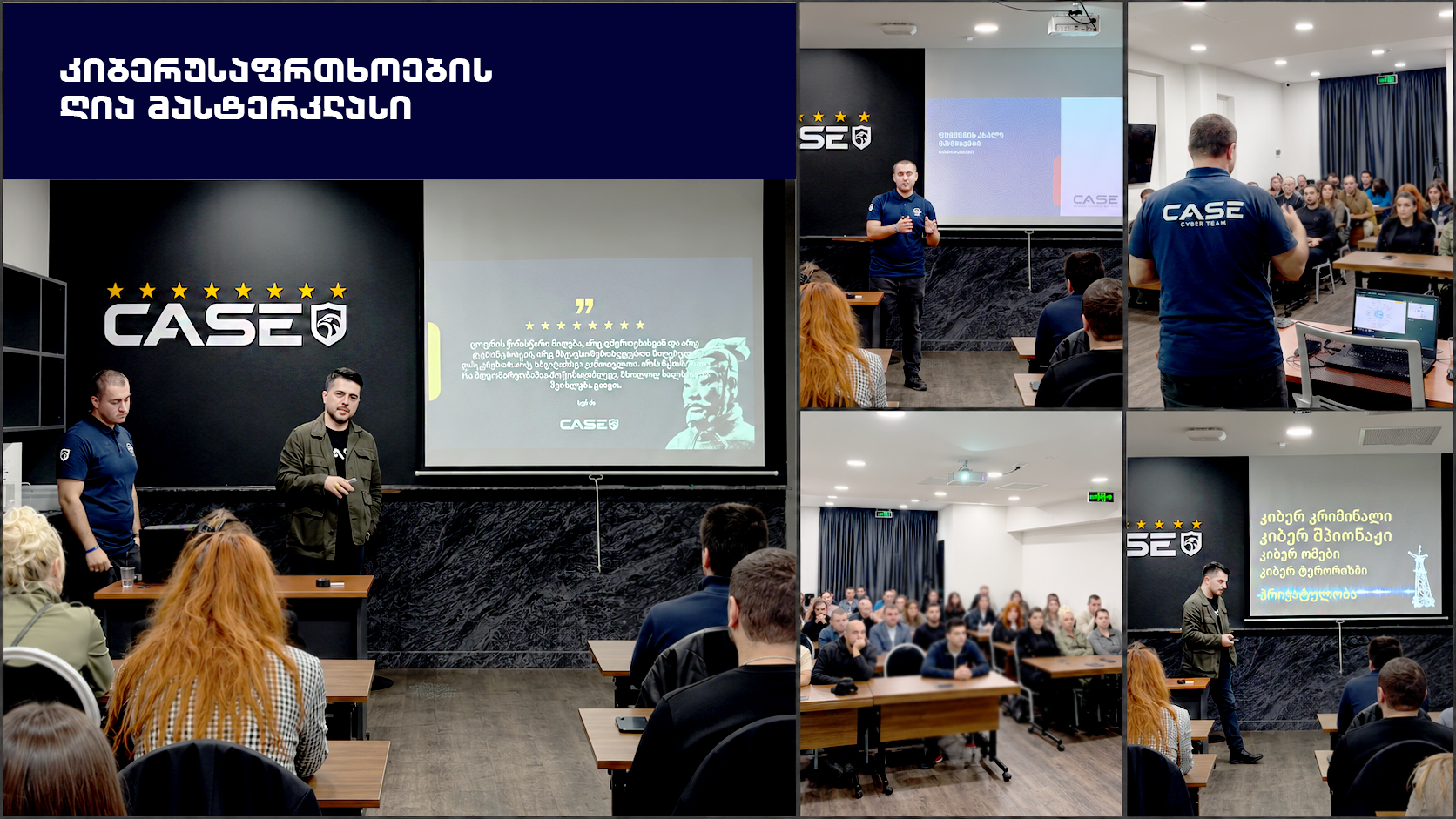
CASE successfully hosted the practical cybersecurity awareness masterclass “Modern Phishing: Detection, Prevention and Response.” The session focused on understanding modern cyber threats and developing practical skills for effective protection against them.
Phishing remains one of the most widespread cyber threats, frequently targeting individuals, major corporations and government institutions alike. Attackers are using increasingly convincing communications, fraudulent websites and social engineering techniques, making timely threat identification more important than ever.
During the masterclass, participants examined the evolving nature of modern phishing from a practical perspective. The session focused on identifying suspicious activity and potential threats, applying effective prevention measures, and responding to cybersecurity incidents correctly and promptly.
The event gave participants a deeper understanding of how cybercriminals exploit human behaviour, trust and a sense of urgency to obtain valuable information, as well as the technical tools and platforms they use. The session also highlighted that cybersecurity is not limited to technological safeguards: informed and well-prepared users are an essential part of any effective defence strategy.
“When an attack is planned—for example, to obtain a database or another asset that requires access to digital infrastructure—the first instinct is often not to ‘hack’ the system itself, but to exploit the people on the other side of it. That is why, alongside technical training, we continuously help our students develop a comprehensive understanding of the human factor. When working with companies, we also pay particular attention to preparing end users as part of our cybersecurity services.”
Lasha Pataraia
Founder and Director of CASE
The masterclass was successfully completed and once again demonstrated the importance of practical, knowledge-based cybersecurity education. Participants showed particular interest in the live demonstration, which allowed them to observe an attack from a hacker’s perspective. The session was led by CASE cybersecurity specialist Shota Abzhandadze.
“In cybersecurity, we continuously encounter new approaches and methods used by criminals against organisations. The use of artificial intelligence has made attackers even more effective, increasing their ability to deceive unprepared users and, consequently, compromise organisations in a variety of ways.”
Shota Abzhandadze
Cybersecurity Specialist at CASE
CASE will continue organising professional and practice-oriented educational events that help individuals and organisations better understand modern cyber threats and protect themselves more effectively.
The event was held in recognition of Cybersecurity Awareness Month. CASE also announced the return of its cybersecurity courses after an extended break. The programmes will prepare students to address cybersecurity challenges in a practical environment, while creating new career prospects and valuable opportunities for professional growth.
Further information about the upcoming cybersecurity courses will be published on the CASE website and social media channels in the coming days.