
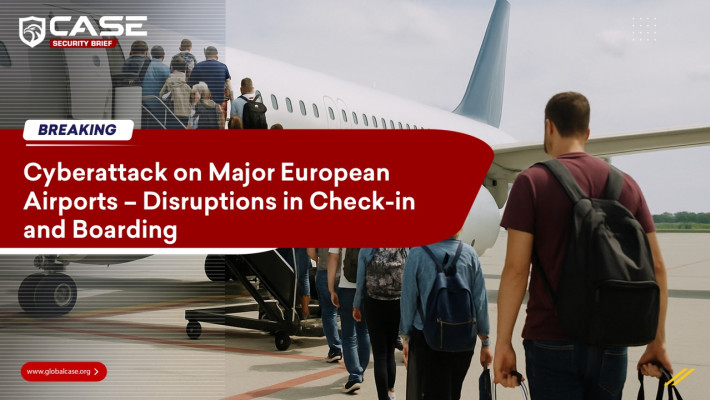
On September 19, a cyberattack disrupted electronic check-in and boarding systems at several major European airports, causing flight delays and operational interruptions.
The first problems were reported at Brussels Airport, Berlin Brandenburg Airport, and London Heathrow, where passengers had to rely temporarily on manual registration and boarding. Other European airports continued operations without interruption.
According to Brussels Airport officials, the attack targeted a service provider that manages check-in and boarding systems — not the airlines or the airports themselves. Collins Aerospace, which provides the MUSE (Multi-User System Environment) platform for self-service kiosks, confirmed experiencing a "cyber degradation" that slowed operations at several airports.
By the afternoon, the situation had partially stabilized. In Brussels, 9 flights were canceled, 4 were diverted, and 15 were delayed by more than an hour. In Berlin Brandenburg, no flights were canceled for this specific reason. At Heathrow, disruptions were minimal with no cancellations.
Collins Aerospace, a subsidiary of RTX Corp., stated it was actively working to resolve the issue, noting that impact was limited to electronic check-in and baggage drop-off systems, with manual operations remaining available.
Simultaneously, St. Petersburg's Pulkovo Airport website was taken offline by a hacking attack, though officials reported that airport operations remained unaffected.